

Courses
Riga Stradins University
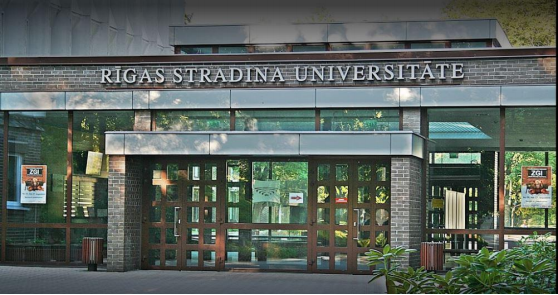
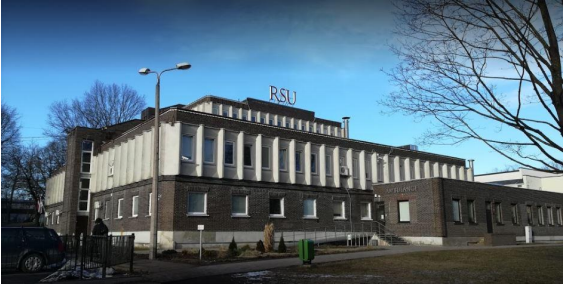
The history of Rīga Stradiņš University (RSU) dates back to 1 September 1950. On that day in Riga, at 12 Z. A. Meierovica bulvāris (at that time named Padomju bulvāris), in the building that was donated by the pre-war patron Kristaps Morbergs for educational purposes, the forerunner of the RSU – Rīga Medical Institute (RMI) opened its doors for the first time.
The RMI was established on the basis of the Faculty of Medicine at the University of Latvia, which is the direct successor of the pre-war Faculty of Medicine at the University of Latvia. The Stradiņš’ name is not a coincidence. Members of the Stradiņš family have had a major influence on the public and academic life of Latvia over the past century. The timely and highly professional activity of Pauls Stradiņš – one of the two professors of medicine remaining in Latvia after the World War II, Dean of the Faculty of Medicine of the University of Latvia – ensured continuity of the values, standards and quality of medical education and built a bridge between the pre-war and post-war education and science of Latvia, as well as laid strong foundations for the establishment and development of the Rīga Medical Institute (RMI).
The first Director of the RMI was professor Ernests Burtnieks. Initially there were three faculties – the Faculties of Medicine, Stomatology and Pharmacy; academic work was organised in 45 departments. Gradually almost all the hospitals in Riga and its surrounds, as well as some of the ambulatory medical institutions were involved in study and research work.
On 30 December 1969 the Faculty of Stomatology moved to the new Stomatology Health Centre building in Pārdaugava, at 20 Dzirciema iela. On 30 September 1987 the first stage of the newly constructed RMI building complex was opened next door; at 16 Dzirciema iela. 16000 m2 that is now the premises of the RSU were gradually furnished to house more than 1000 offices, lecturerooms, laboratories and administrative premises.
In 1990 the Rīga Medical Institution was renamed the Medical Academy of Latvia (Academia Medicinae Latviensis or AML), but in 1998 the Constitutional Assembly approved the new name – Rīga Stradiņš University. Within nearly ten years the Medical Academy had turned into a university college, educating high quality specialists of medicine and pharmacy, rehabilitation, nursing, public health and social sciences. In 2002 the Saeima of Latvia adopted the law on the RSU Constitution.
In 2009 at 16 Dzirciema iela the main venue for ceremonies – the Great Hall – was opened, thus putting a symbolic end to the development of the RSU as an independent and fully fledged educational and scientific institution.
RSU is the only university in Latvia that has traditionally been closely integrated within the health care system, providing preconditions for the successful operation of Latvian medical institutions. Currently nine faculties at the RSU offer Bachelor, Master and Doctoral degree, professional and continuing education programmes. Anyone, starting from a high school graduate to a PhD, can gain a new qualification, improve their knowledge, as well as give their contribution to the creation of new knowledge and technologies. The high quality education provided by the RSU gains more and more popularity among foreign students.
Doctoral Studies
A Doctorate is the next step following a Master's degree (or what is generally considered to be the end of one’s studies). It will increase your competitiveness in the job market as you will improve your skills in both academically and within research by defending your thesis. You may subsequently wish to pass on your knowledge on by joining the teaching staff at RSU.
There are over 200 doctoral students at our university. All doctoral studies are full-time.
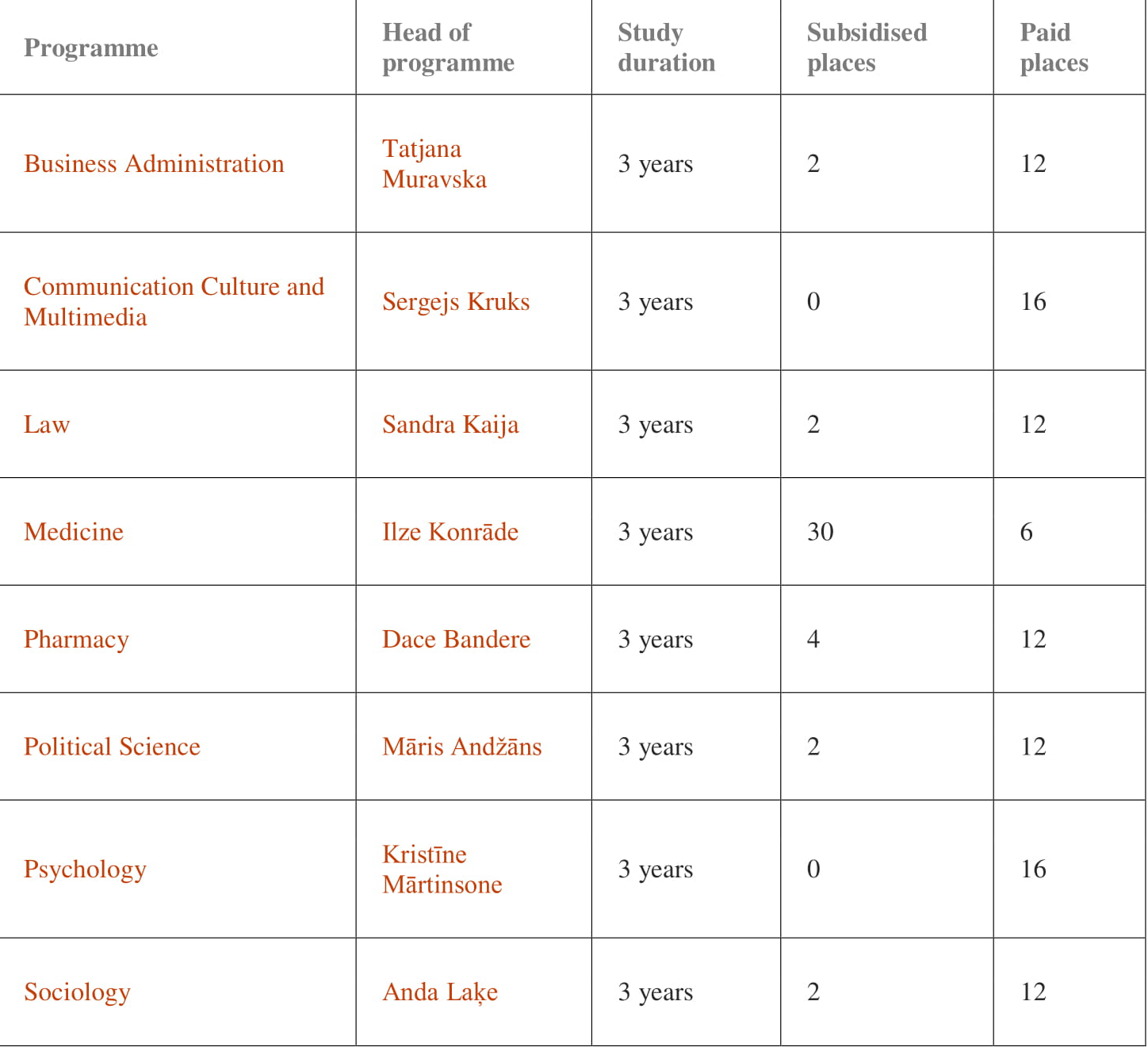
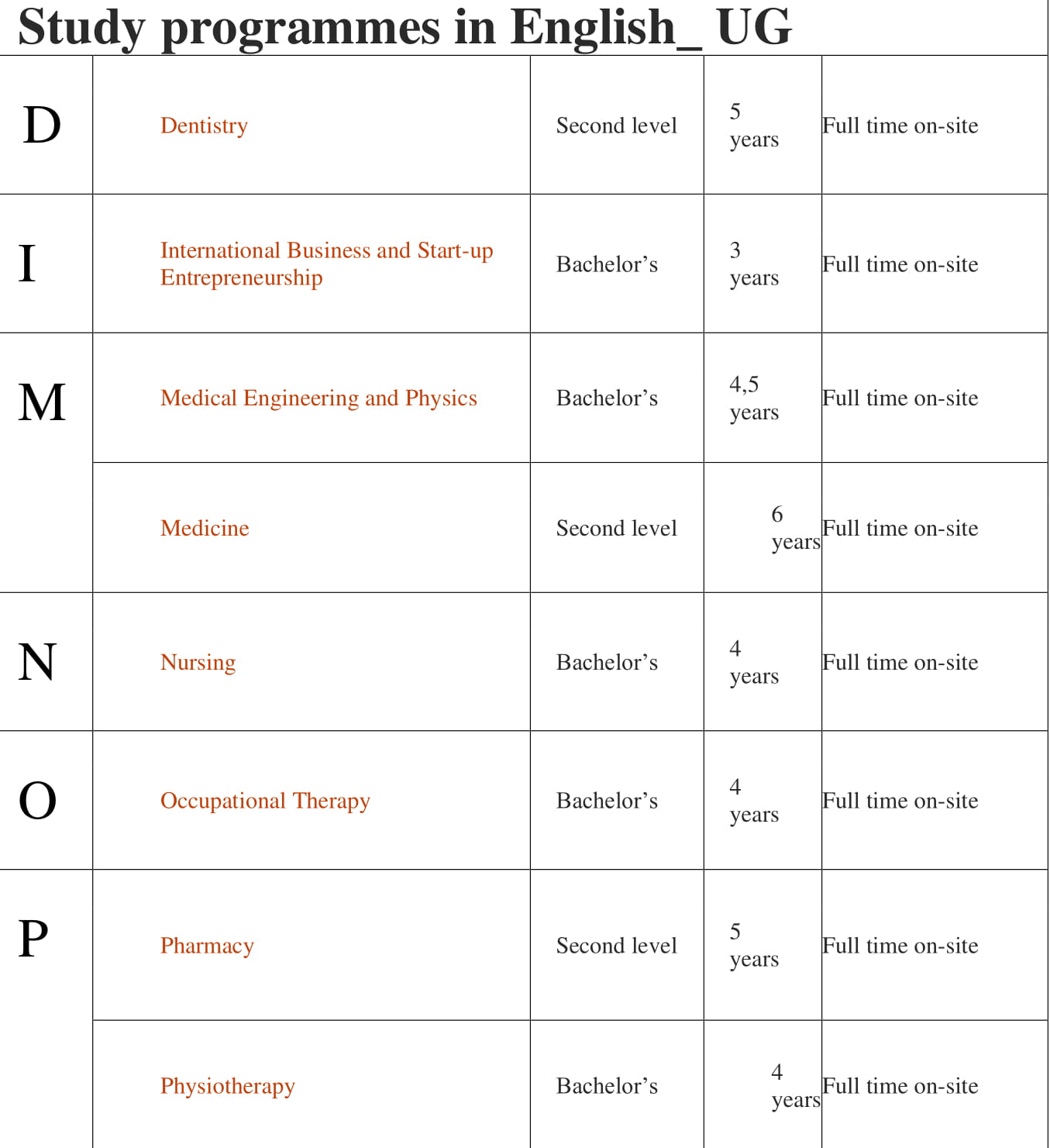
RSU provides full-time studies in English in the following programmes:
UNDERGRADUATE PROGRAMMES
Medicine
6 years
Medical Doctor (MD)
Dentistry
5 years
Doctor of Dental Surgery (DDS)
Pharmacy
5 years
Pharmacist
Nursing
4 years
Professional Bachelor's degree in Health Care | Nurse
Physiotherapy
4 years
Bachelor's degree in Health Care
Occupational Therapy
4 years
Bachelor's degree in Health Care
International Business and Start-up Entrepreneurship
3 years
Bachelor's degree in Social Sciences in Management and Administration
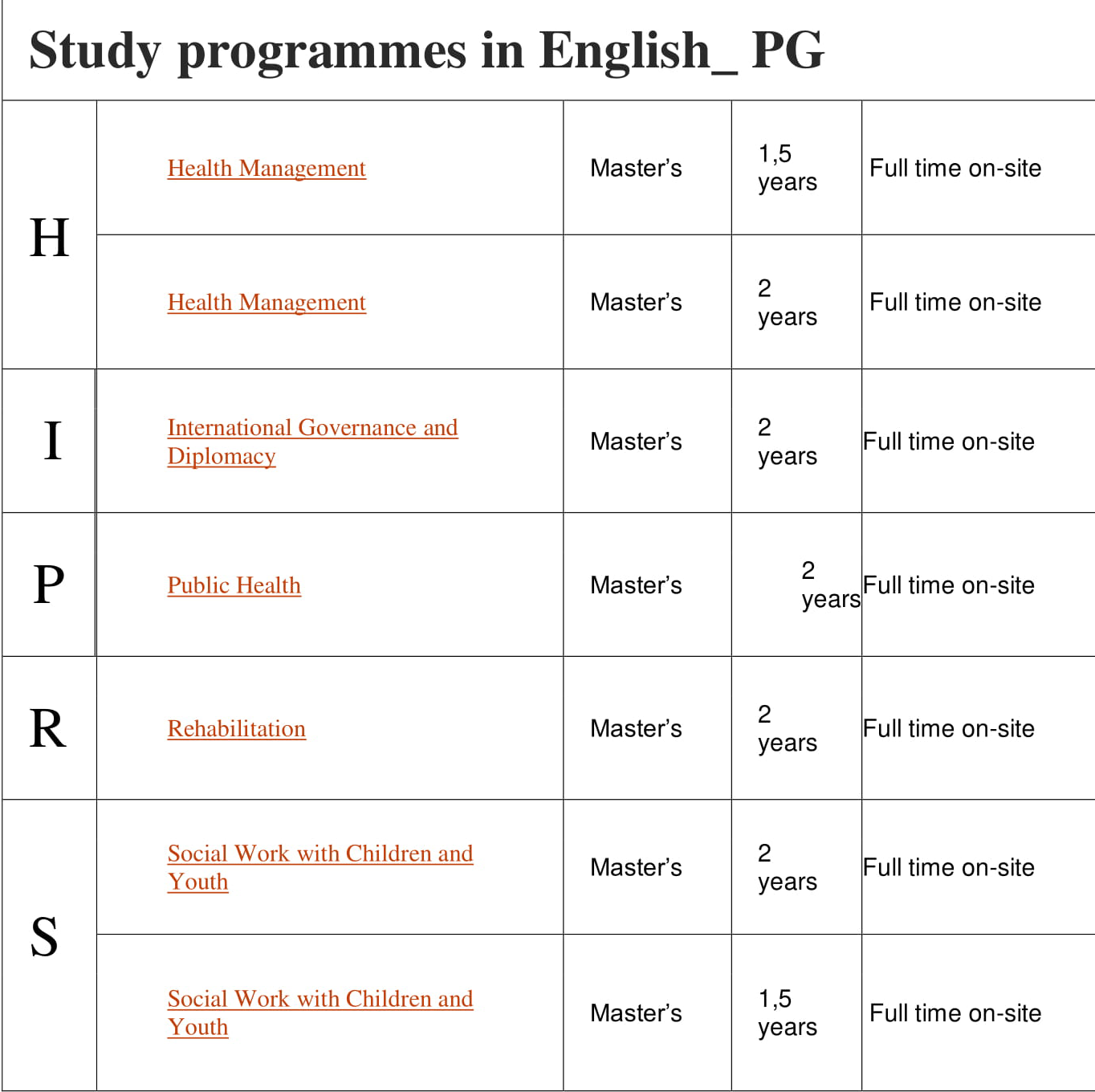
MASTER'S PROGRAMMES
Health Management
2 years
Professional Master's degree in Health Management | Professional qualification "Business Establishment Executive"
Health Management
1.5 years*
Professional Master's degree in Health Management | Professional qualification "Business Establishment Executive"
Public Health
2 years
Master's degree of Health Science in Health Care (MSc)
Social Work with Children and Youth
2 years
Professional Master's degree in Social Work | Social Worker
Social Work with Children and Youth
1.5 years*
Professional Master's degree in Social Work | Social Worker
International Governance and Diplomacy
2 years
Master's degree of Social Sciences in International Relations (MSc)
Rehabilitation
2 years
Academic Master's degree of Health Sciences in Health Care (MSc)
* The duration of studies depends on your Bachelor's level education and work experience
